
With more than 5,000 projects completed over its 34-year history, DMR has left a lasting imprint on New Jersey’s architectural footprint. Great communities are anchored by strong systems of transportation, education, and healthcare, and DMR has played a vital role in shaping each of these across our region. Many of the firm’s projects continue to perform exactly as envisioned, while others have been revisited and enhanced over time to meet evolving user needs and respond to changing regional contexts.
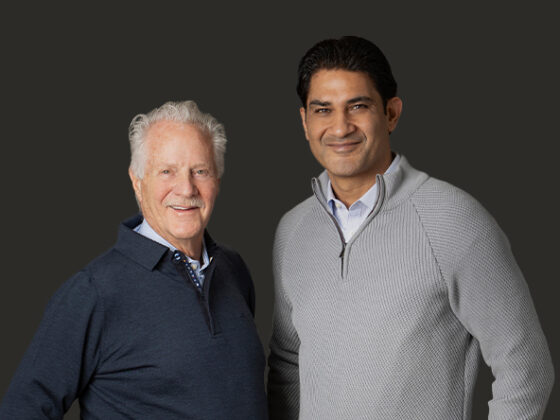
“It is especially rewarding to be brought back to a property years after having designed it to make changes that extend its life,” says Lloyd Rosenberg. “We return to find that not only does the building need to address new considerations of the user, it also is responding to fundamental issues occurring in the industry, immediate surroundings, and broader region.”
The following 10 projects exemplify how thoughtful, future-ready design can support not only a building’s long-term performance, but also its evolving role within its surrounding environment.
- Annin Lofts
One of Russo Development’s first residential projects, Annin Lofts in Verona is the site of the Annin Flag factory, which was redeveloped, and a new structure that was similar in scale and reminiscent of the design of the original building.
“Annin Lofts was unique in the Russo portfolio because it was our only adaptive re-use project, but it also demonstrated one of our core values of tapping into demand for luxury housing in unexpected locations,” says Ed Russo, president of Russo Development. “Its appeal to renters in the Essex County suburbs only gets stronger with time, and much of that has to do with the project’s innovative blending of old and new.”
- Tenafly School District
DMR is an expert at supporting referendum-based school projects across New Jersey, helping pass more than $300 million in funding that has delivered new schools in Sparta, Carlstadt, Carteret and Franklin Lakes. DMR also helped pass three referendums in Tenafly, first in the early 2000s and then again in 2024. These long-standing relationships highlight DMR’s trusted role in helping school districts plan, communicate, and deliver impactful educational environments supported by their communities.
The current $76 million Tenafly project series prioritizes improved instructional spaces, security and ADA accessibility across six schools plus the Geissinger Athletic Complex and the district’s offices.
“A lot has changed in education in just the past two decades and investing in upgrades is imperative to New Jersey schools if they want to remain competitive,” said Pradeep Kapoor. “That goes for classrooms but also extracurricular and sports activities that may not have existed in the early 2000s like STEM programs and pickleball.”
- Robert Wood Johnson Campus
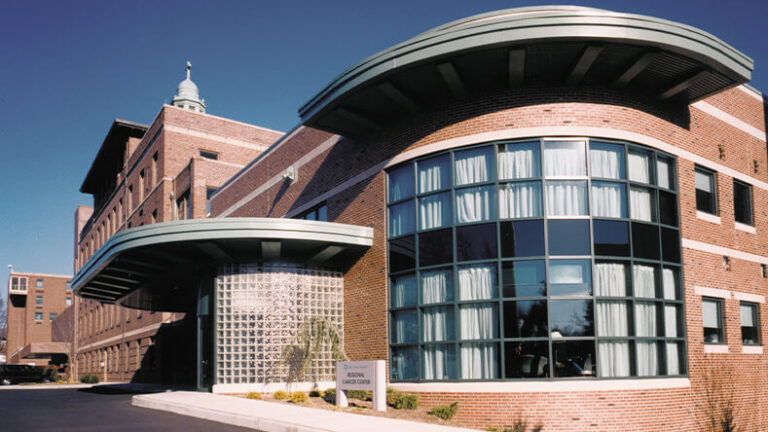
Tenafly is not the only entity to retain DMR over multiple time periods. DMR has a long-standing track record in designing healthcare and specialty treatment facilities. While DMR’s work includes notable projects such as the Holy Name Cancer Center—originally built two decades ago and still serving the community—its longstanding relationship with Robert Wood Johnson University Hospital exemplifies the firm’s ability to adapt to the rapidly changing demands of healthcare environments.
Technology has a dramatic effect on architecture, but no more so than in the healthcare space. When DMR introduced New Jersey’s first PET scan lab at Robert Wood Johnson hospital the landscape was yet to be transformed by the series of mergers–and innovations–that have come to define today’s healthcare environment.
Other DMR projects on RWJ’s campus included offices, labs, outpatient offices and nurse’s stations.
- St. Joseph’s School for the Blind
St. Joseph’s School for the Blind in Jersey City retained the firm in 2005 to build a new school, as their 1927 Concordia Learning Center had become too small to address the growing needs and evolving program of the school and accommodate students with multiple disabilities. The result was a 73,000 SF facility with 17 classrooms, a multi-purpose gymnasium/auditorium, a multimedia center, therapy and work rooms, a physical therapy pool, an adaptive playground, and music, art and pre-vocational classrooms.
The building was one of New Jersey’s first LEED certified private schools and also DMR President Pradeep Kapoor’s first LEED Certified project, the catalyst to a portfolio that has grown to include seven Certified, Silver and Gold level projects.
“LEED certification at the time of the original construction was a pioneering feature that allowed DMR to be among the first to explore environmental issues that have become a required consideration, whether the owner seeks the designation or not,” said Mr. Kapoor. “Sustainability is in the DMR DNA and a lot of that traces back to St. Joseph’s.”
- Blue Foundry Headquarters
Blue Foundry Bank engaged DMR to design its new administrative headquarters as it relocated from downtown Rutherford to Morris County in 2021. The project not only needed to embody the bank’s evolving brand identity but also required mid-course workspace adjustments to address pandemic-related concerns.
“The aesthetic and functionality of our new administrative headquarters serve as symbols of the bank’s renewed business focus and vision,” says Blue Foundry Bank President & CEO Jim Nesci. “It was essential for us to align our physical space with our brand, and a tour of our offices clearly shows how the bank’s image is thoughtfully crafted into nearly every aspect of the design.”
- Jersey City Justice Center
Jersey City’s Justice Center at 365 Summit Avenue originally opened in 2001 and has shown itself to be a durable facility and an iconic venue for the City’s courts and offices for judges, prosecutors and staff.
“We designed the Justice Center to meet the needs of the City at the time, but also with enough flexibility to grow with it,” said Lloyd Rosenberg. “It’s rewarding to see how well the building has adapted over the years to support new technology, procedures, and expanded use without losing its original purpose.”
- Wayne Police Department
When Mayor Chris Vergano spearheaded the municipality’s development of a new police station in 2012, the objectives extended beyond accommodating the growth of the department and the introduction of new policing tactics and technology. The final design balances function and civic presence with clearly defined operational zones, and spaces that support both law enforcement and community interaction.
“Our goal was to create a facility that supported the department’s operational needs while also projecting openness and accessibility to the community,” said Kurt Vierheilig. “We worked closely with the Township to develop a design that could evolve with the way public safety services are delivered over time.”
- Meadowlands Sports Complex Train Station
The train station at the Meadowlands Sports Complex was an enhancement related to the construction of what became American Dream and was a critical consideration of the Stakeholder Committee that was convened to assess the impacts of the development on the community.
“The Meadowlands Station was a forward-thinking investment in the region’s future,” said Jim Kirkos, president of the Meadowlands Chamber and a member of the Stakeholder Committee. “The talent and vision of DMR Architects added critical mobility to the complex via the design of the train station and helped lay the groundwork for major regional wins—from hosting the Super Bowl and WrestleMania to securing the 2026 FIFA World Cup.”
- Carteret’s New Junior High School
In Carteret, DMR designed the new 60,000 SF Junior High School after a site planning exercise that resulted in locating the building on a property adjacent to the town’s high school. Funded through a referendum that DMR guided, plans also included a pedestrian bridge between the Junior and Senior High Schools so that the schools could share a newly renovated auditorium.
The project was the starting point for Carteret to hire DMR for additional work throughout the district including a redesign of the high school’s main entrance that served to provide the building with an identity and visual impact while increasing security measures.
- Bergen PAC
DMR has worked on notable historic preservation projects, including enhancements and design improvements to the iconic Bergen Performing Arts Center. The renovation transformed the beloved 1,300-seat theater, originally opened in 1926, into a modern venue capable of hosting nearly 200 events annually. The project included a full renovation and expansion of the existing lobby and the addition of a new VIP room featuring two bars and a private entrance.
To honor the building’s legacy while appealing to a contemporary audience, DMR blended raw industrial design elements, such as exposed beams, brick walls, pendant lighting, and visible ductwork, with the refined traditional finishes expected in a classic theater. The result is a dynamic, updated space that respects the theater’s historical character while meeting the demands of today’s diverse performing arts audiences.
“DMR Architects did an incredible job transforming our historic theater. Their design preserves the character and legacy of bergenPAC while introducing modern features that elevate the experience for both performers and audiences,” said Alexander Diaz, Executive Director at Bergen PAC. “It’s a renovation that honors our past and supports our future.”