
Posts By :

Megan Apostol

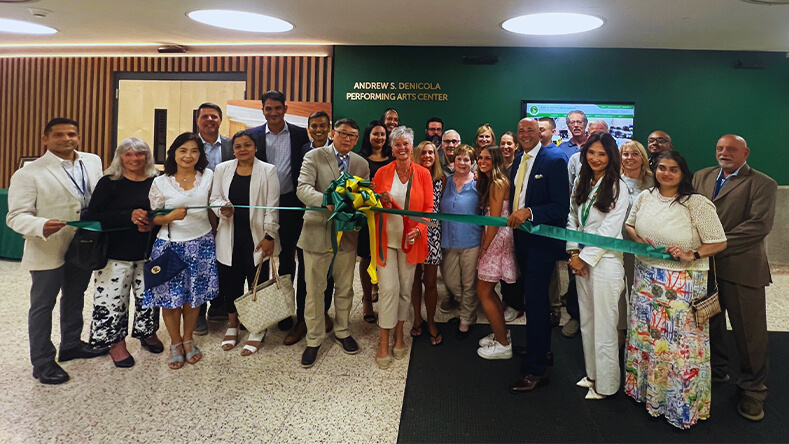
East Brunswick Opens New Multi-Purpose Ice Arena, Creating a Year-Round Community Destination

East Brunswick Opens New Multi-Purpose Ice Arena, Creating a Year-Round Community Destination 789 444 DMR Architects

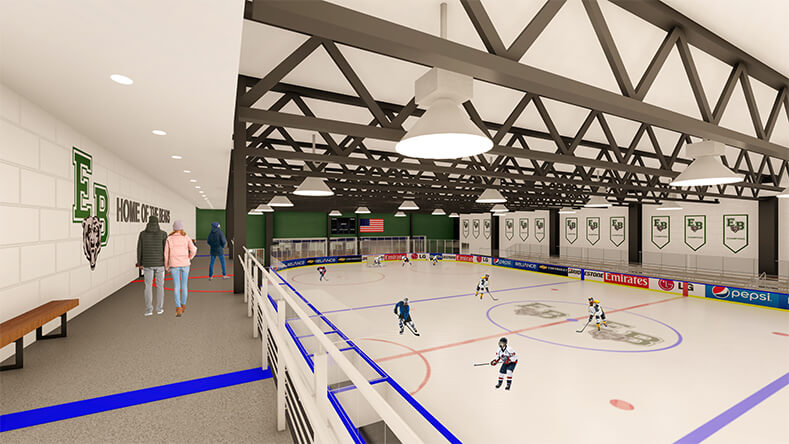
East Brunswick officially opened its new multi-purpose ice arena on February 2, delivering a modern recreational facility that will serve as a year-round community hub.

The rink was designed to support recreational skating and youth hockey while also accommodating public events, private parties and fundraisers. By expanding beyond traditional ice programming, the facility is expected to become a central gathering place for residents and a destination for families and teams from across the region. In addition to promoting active lifestyles, the rink creates new revenue opportunities for the township.

The project reflects a growing understanding among municipalities that recreational infrastructure has long-term value. Facilities like ice rinks and athletic centers are increasingly viewed as essential civic spaces that bring people together and strengthen community identity.

The 84,000 SF, twin-rink arena is equipped with a rental area, multi-purpose room, party room, concession stand and locker rooms. Both rinks include bleacher seating and a second-floor balcony marked with details on the floor designating center ice, goalie creases and the blue lines. At rink one, a raised viewing platform adjacent to the lobby and concessions area, provides a third viewing experience through large glass windows. The symbolic lobby is marked by a Kalwall-enclosure intended to represent an ice cube.

DMR Awarded Two New Design-Build School Projects Following Two Successful Openings

DMR Awarded Two New Design-Build School Projects Following Two Successful Openings 789 444 DMR Architects

DMR has been awarded two new school design-build projects in West New York and Elizabeth, marking another major milestone in the firm’s expanding design-build portfolio.  DMR was selected in partnership with the Terminal Construction Corporation for both of these projects and is working under the oversight of the New Jersey Schools Development Authority (NJSDA), which manages the program. The news comes after the successful September openings of DMR’s most recent design-build projects in Wood-Ridge and Bayonne.

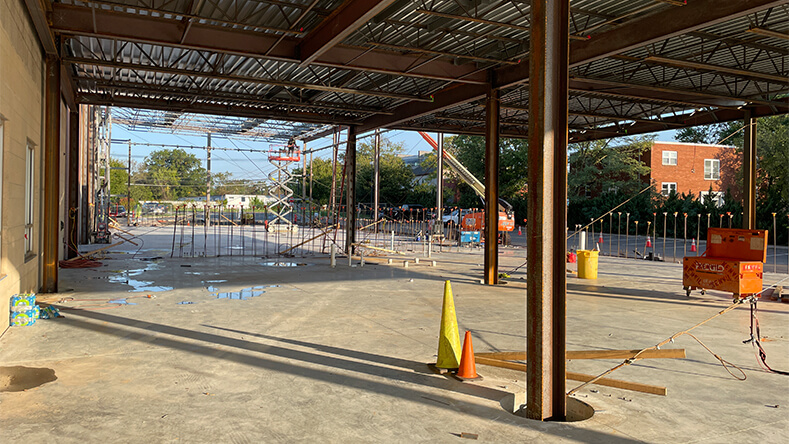
The new Elizabeth school is a $76.8 million investment and will serve more than 900 students throughout 142,000 SF and is one of the largest of its kind in the city. The new facility will include seven pre-kindergarten classrooms; six kindergarten classrooms; six self-contained special education classrooms; 22 general classrooms for grades 1-5; nine general classrooms for grades 6-8; one resource room; five small group instruction rooms; three science classrooms; and dedicated space for vocal music, art and a media center with a makerspace. The project is expected to be completed in 2028.

The new West New York project is 162,000 SF middle school for grades 6–8, representing a $92 million investment that will serve approximately 875 students. The new facility will include 30 general classrooms, six science labs, multiple science prep rooms, dedicated art rooms, and a wide range of specialized learning and student-support spaces designed to offer a modern, flexible, and technology-forward educational environment.  The project is expected to be completed in 2028.

This project follows two successful design-build school completions by DMR, both of which opened in September 2025.

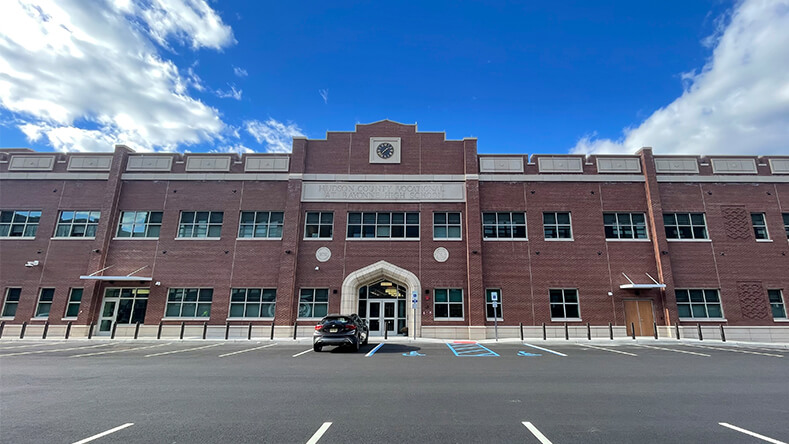
  • The Hudson County Schools of Technology Craig Guy Center at Bayonne High School, a 20,000 SF, $24 million vocational center with culinary labs and fabrication shops tailored for career and technical education.
  • Highland Avenue Learning Annex & Recreation Center in Wood-Ridge, a 56,500 SF addition and 44,000 SF renovation to the existing Doyle School that addressed enrollment growth with new classrooms, flexible learning spaces, and support facilities.

Together, these four projects reflect how the design-build model is being used to reduce delays, improve cost certainty, and unify design and construction under a single contract.

“Design-build allows us to accelerate the entire process in ways traditional delivery can’t,” said Pradeep Kapoor, AIA. “With tight timelines, we’re often able to begin critical-path construction months earlier because design and construction happen in parallel. That level of coordination and responsiveness is key when you’re building schools for growing communities.”

“Our priority was to deliver a high-quality facility on a timeline that aligned with our community’s needs,” said Mayor Paul Sarlo of Wood-Ridge. “The design-build approach allowed us to move faster and stay coordinated throughout the process, which was essential for a project of this scale. The new Highland Avenue Learning Annex and Recreation Center has already had a positive impact on our district.”

“The design-build process is efficient because everyone is working toward the same goal from the start,” said Donald N. Dinallo, President & CEO of Terminal Construction Corporation. “When you are side by side with an architect like DMR, the workflow becomes even smoother. Decisions are faster, challenges are resolved quickly, and the whole project benefits.”

Design-build was made more accessible to public agencies in New Jersey following the Design-Build Construction Services Procurement Act of 2021, which allows municipalities and other government bodies to pursue this model for projects over $5 million. The legislation has helped create more flexibility to help meet tight timelines and evolving student needs.

How Smarter Library Spaces Are Shaping Smarter Communities

How Smarter Library Spaces Are Shaping Smarter Communities 789 444 DMR Architects

Libraries don’t just hold knowledge—they help build it. Across New Jersey, DMR is leading a wave of library redesigns that are making communities smarter, more connected, and better prepared for the future. From the Dr. Martin Luther King Jr. Library & Learning Center at Essex County College in Newark to the newly transformed Middletown Township Public Library, DMR’s work is redefining what a library can be: a place where history, technology, and community intersect to inspire lifelong learning and growth.

Redesigned libraries do more than update infrastructure. According to national data, renovated libraries see attendance increases of 30–80%, program participation more than double, and measurable gains in student literacy and digital access. “These aren’t just renovations—they’re reinventions shaped by a deep understanding of how these communities use public space,” said Kurt Vierheilig, AIA, LEED AP BD+C. “A modern library is a civic engine, a technology hub, and a cultural connector.”

Middletown Township Public Library
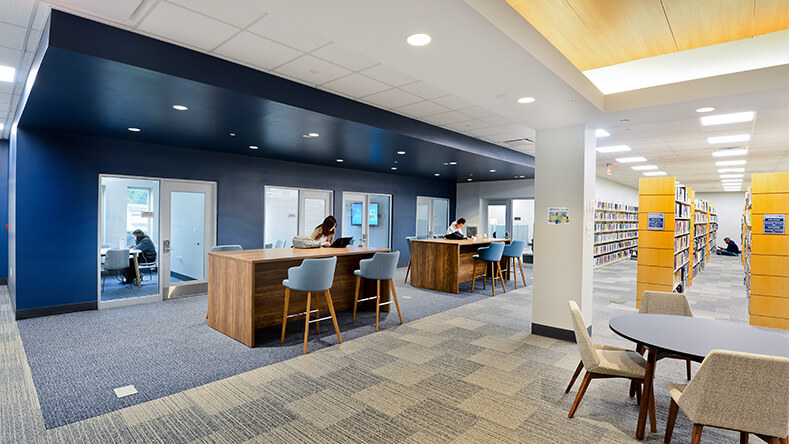
DMR transformed 15,000 SF of dated space into a dynamic multi-generational hub. A former computer lab became a teen innovation zone and makerspace, now home to 3D printers, textile equipment, and creative technology. The expanded History Room celebrates Middletown’s Revolutionary War legacy, now four times its original size and enhanced with interactive displays and curated artifacts.

The renovation also added four private study rooms, an inviting fireplace lounge, and a more open, naturally lit floor plan with flexible seating for all ages.

“The new design was created to meet the needs of our ever-growing Middletown community so we can better serve them,” said Business Manager, Wendy LaTona “This library isn’t just for reading—it’s where neighbors connect, where teens explore new ideas, and where our town’s deep rooted past is honored in a space built for its future.”

Essex County College – Dr. Martin Luther King Jr. Library & Learning Center
In Newark, DMR’s design repositioned the 18,000 SF library as the heart of campus life. The project relocated the Learning Center into the space, integrating AI-enabled academic tools, collaborative tutoring zones, and a custom bookcase honoring Dr. King as a visual and emotional anchor. Clerestory windows were re-opened to flood the space with light, while floor-to-ceiling glass storefronts created a transparent and welcoming entry.

“We wanted students to walk in and feel that this was their space,” said Essex County College President Dr. Augustine Boakye. “This library gives students a sense of belonging. It reflects the diversity, resilience, and ambition of Essex County College—and it honors the legacy of Dr. King by creating a space where opportunity, learning, and equity come together.”

“The new design has brought a real energy to the space—it’s being used more consistently throughout the day by students and faculty,” said Mohammed Seddiki, Executive Dean & Chief Information Officer of Essex County College “The layout and openness make it easier for people to focus, collaborate, and feel comfortable using the library in different ways.”

Real-World Results Back the Design Strategy
According to a Federal Reserve study, public library renovations are linked to:

  • A 21% increase in children’s book checkouts
  • An 18% increase in children’s attendance at programs
  • A steady rise in reading test scores over seven years

Additional case studies show circulation often increases by more than 50%, with new users engaging in programs for the first time. “Design is what transforms a library into a vital part of the community,” said Pradeep Kapoor, AIA. “The way a space is laid out—how it invites people to gather, study, or simply spend time—directly impacts how it’s used. Our goal is to create environments that support how people learn, connect, and grow today.”

These projects build on DMR’s continued work across New Jersey, including the Montgomery branch of the Somerset County Library System, and showcase the firm’s leadership in public infrastructure that is responsive, inclusive and forward-thinking.


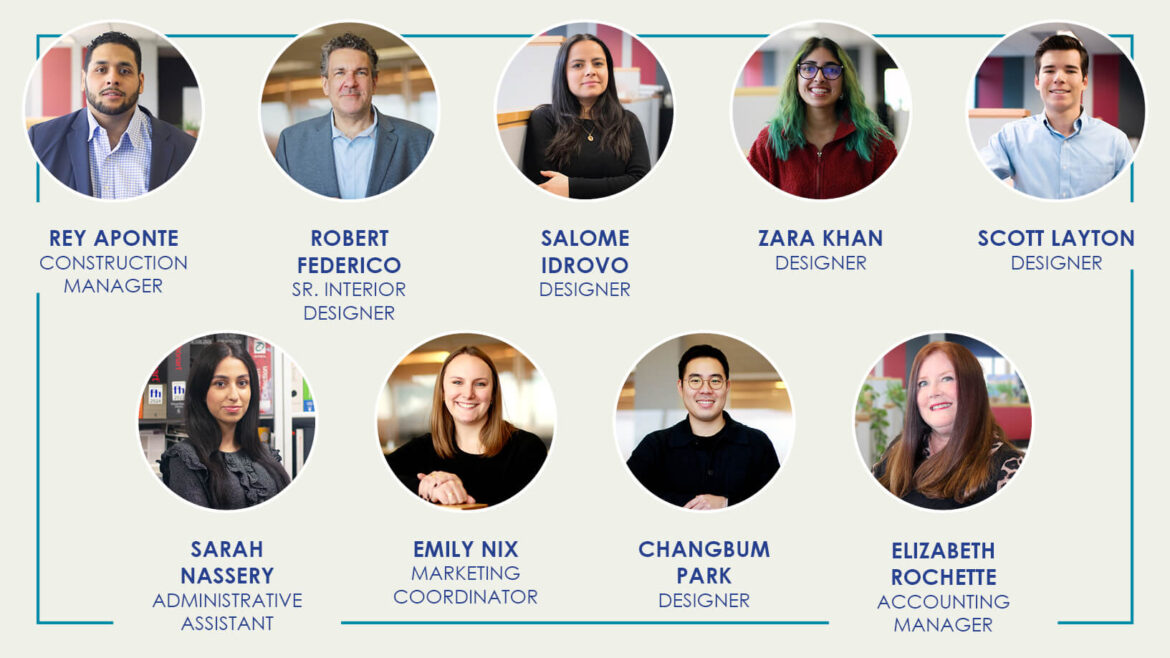
Headshots of nine hires at DMR Architects in the last year.

DMR Showcases Commitment to Talent Development in a Competitive Hiring Environment

DMR Showcases Commitment to Talent Development in a Competitive Hiring Environment 1633 925 DMR Architects

Amid a challenging hiring landscape for architecture and engineering firms, DMR has welcomed nine new team members over the past year, reflecting our long-term commitment to mentorship, career development and cultivating talent from within.

The new hires span departments including architecture, interiors, construction administration, marketing and operations – showcasing a mix of seasoned professionals and early-career talent.

“We believe great design starts with great teams,” Pradeep Kapoor, AIA said.  “We’re proud to be growing – not just in size, but in the quality and character of the people joining our firm. Providing mentorship and opportunity has always been central to our culture, and it continues to bring fresh energy and ideas into our work.”

Congratulations to the following team members on their hiring at DMR:

  • Rey Aponte, Construction Manager
  • Robert Federico, Senior Interior Designer
  • Salome Idrovo, Designer
  • Zara Khan, Designer
  • Scott Layton, Designer
  • Sarah Nassery, Administrative Assistant
  • Emily Nix, Marketing Coordinator
  • Changbum Park, Designer
  • Elizabeth Rochette, Accounting Manager
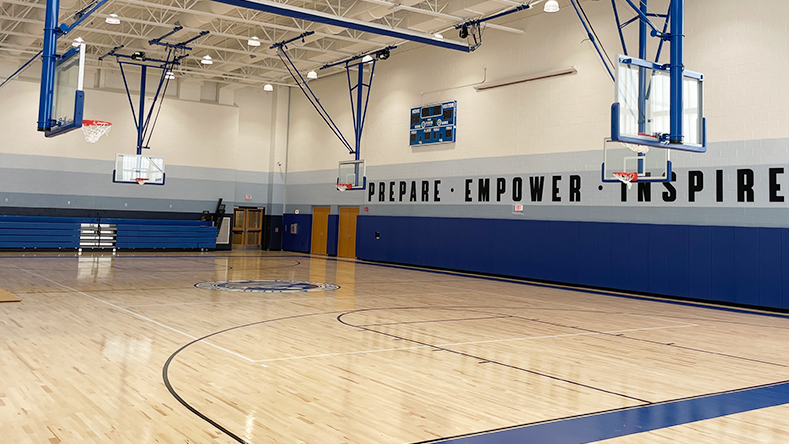
A gym addition at New Brunswick High School provides additional space for physical education and sports.

In PreK-12 Design, The Right Architectural Partner Completes the Team

In PreK-12 Design, The Right Architectural Partner Completes the Team 789 444 DMR Architects

Of the more than 1,000 educational projects completed by DMR Architects, more than 80% can be categorized as reinvestment relationships that have spanned decades, touched most of the districts’ buildings and guided the community through major moments.

DMR has supported at least 30 districts through 25 projects each, a window into the role that an architect plays in the process of providing modern, safe and stimulating infrastructure for learning.

While our architects are also the visionaries behind celebrated new construction, most preK-12 school needs fall into the category of essential building upgrades, additions, health and safety concerns and other facility maintenance needs.

In addition to choosing a capable designer, choosing the right architectural partner for these projects means choosing a firm that can identify unique funding sources, comprehend pragmatic functions of the building, consider how construction projects will disrupt the existing ecosystem and examine every opportunity for a chance to improve functionality.

A sampling of some of these holistic stories include:

20 Years Later, DMR Returns

Between 2000 and 2005, DMR provided extensive services for the Tenafly Board of Education, helping to pass two referendums totaling $44 million to fund projects at all schools. In 2022, DMR was retained for the second time as the district sought to again bring all of their facilities up to modern standards.

DMR was tasked with the process of identifying hundreds of needs, consolidating needs gathered by administrators, previous professionals and DMR’s own surveys; developing a cost estimate for hundreds of projects; and identifying how projects could be organized to maximize funding sources, including through an Energy Savings Improvement Plan (ESIP); Elementary and Secondary School Emergency Relief (ESSER) funding; the district’s capital reserve; and what became a $76 million public referendum, which passed in September 2024.

A Relationship Delivers Projects for 15 Straight Years

As Architect of Record since 2008, DMR has provided professional services for nearly 50 projects in New Brunswick, projects that range from plans and assessments that have required the examination of every square foot of every building, to working on the development team that delivered the new Blanquita B. Valenti Community School. In between these projects have been HVAC and mechanical upgrades, fields, masonry repairs, a $9 million renovation of a former parochial school into Board of Education offices and a $6 million gym addition that was championed for more than a decade.

30 Projects Delivered Without Taxpayer Increase

DMR first began working with the Hackensack Board of Education in the early 2010s, completing a number of major projects such as an emergency reconstruction when a portion of Fanny Meyer Hillers School was deemed unsafe for occupancy.

Years later, DMR was retained again by the Hackensack Board of Education, this time following a failed $170 million referendum by a previous team. While the referendum did not receive the funding that would have made it possible, upgrades across the district were still desperately needed. Since 2019, DMR has supported the district through more than 30 projects valued at more than $45 million. Many of these projects were initially part of the failed referendum, but were able to be delivered through creative funding mechanisms including an ESIP and ESSER funding.

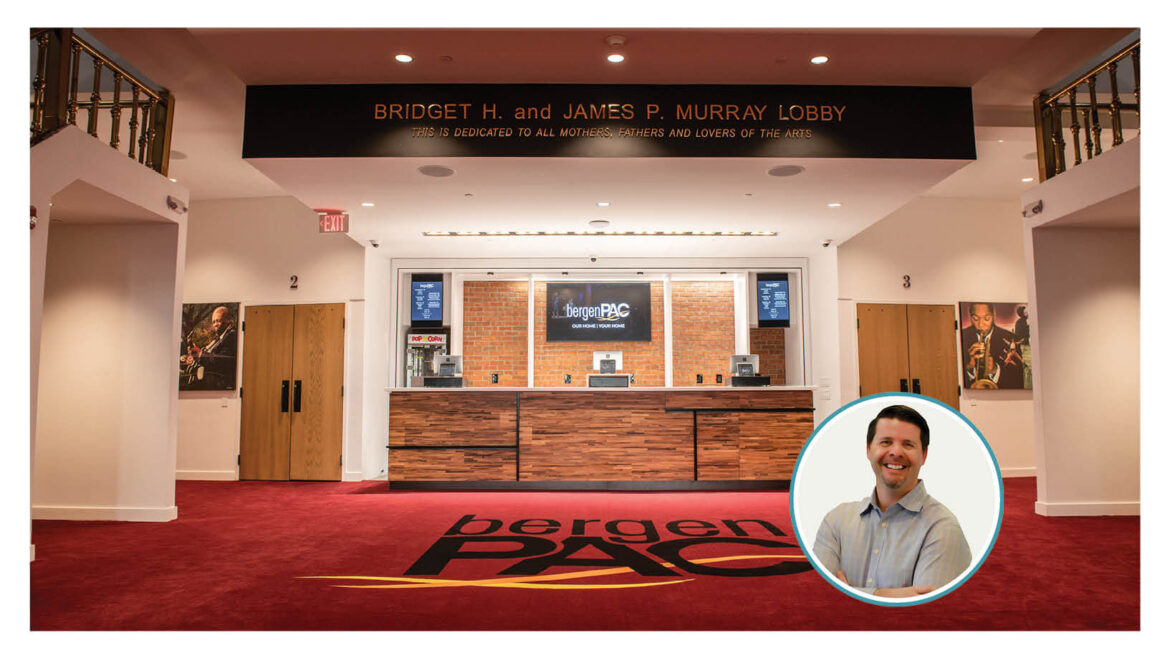
The main lobby of the iconic Bergen Performing Arts Center is a vibrant space that patrons want to spend time in. Pictured in the lobby are industrial design elements, such as wooden panels, juxtaposed to traditional elements, such as ornate gold railings. Also pictured is the author’s photo.

Today’s Performing Arts Centers are Central to Economic Stability

Today’s Performing Arts Centers are Central to Economic Stability 1633 925 DMR Architects

By Kurt Vierheilig, AIA, LEED AP BD+C

According to the most recent Arts & Economic Prosperity report by Americans for the Arts, when we fund the arts, we are not supporting a frill or an extra. Rather, we are investing in an industry—one that stimulates the economy, supports local jobs, and contributes to building healthy and vibrant communities.

By working with DMR Architects, municipalities have been able to use their existing and new buildings and green spaces to provide unique performance spaces.

In Englewood, the recently completed renovation of bergenPAC was informed by the board’s goal to rejuvenate the outdated facility while preserving its cultural significance to Downtown Englewood.

The resulting aesthetic is a blend of modern and traditional elements including exposed brick walls, marble on interactive bar areas, bronze detailing and wood paneling paired with exposed ceilings and hanging lights to give it a current vibe.

But before we got there, we were faced with a situation we as architects are frequently tasked with: They knew what they wanted but weren’t sure how to get there.  We worked with them through a few iterations of design, renderings, and samples to help them understand and translate their vision into a reality.  It was a process to get there but the result exceeded all expectations with our client calling the experience, “a harmonious marriage of architecture and the performing arts and a testament to the power of design as inspiration and elevation for the human spirit.”

The unique juxtaposition of materials contributed to an improved pre-show experience in the public entry lounge, as well as in a newly created VIP entertainment area with its own entryway.  The atmosphere upgrades throughout have resulted in people coming earlier to gather before entering the theater space and more repeat visits, and the new VIP area also allows the facility to host exclusive events like meet-and-greets with talent.  It has also elevated bergenPAC as part of a visit to Englewood that is known for its upscale shopping and dining and is now attracting a higher caliber of talent that fills its calendar throughout the year appealing to a wider demographic including young professionals looking for a night out as well as parents looking for family entertainment.

We also worked on the award-winning repurposing of Hackensack’s 140-year-old Masonic Temple into a 224-seat performing arts center.  When we began working with the city on its downtown redevelopment and rehabilitation plan in 2012, it stressed that the inclusion of civic elements and public spaces were key to the city’s success.

Hackensack’s previous facility was somewhat makeshift, in a space that wasn’t located, designed or configured to function as a theater or to inspire placemaking.  As part of the planning process, we suggested that the city should purchase the more centrally located Masonic Temple and adjacent parking lot as a replacement for the original PAC.

Interior design anywhere—but especially in performance spaces—is about igniting as many of the senses as possible including visually pleasing design, comforting materials for seating, and incorporating the best acoustics. It’s important to create a cohesion to enhance the experience for theatergoers.

The redevelopment of the Masonic Temple’s interior allowed them to create a robust entertainment calendar and was central to the plan that has since attracted retail and dining businesses as well as developers who have since built thousands of residential units.

The Hackensack PAC’s interior upgrades were complimented by the conversion of the adjacent parking lot into Atlantic Street Park, an urban green space where those who live and work in Hackensack can enjoy nature as well as municipal events like movie nights and free concerts at its amphitheater.

In Woodcliff Lake, DMR designed concepts for a two-acre, municipally owned parcel into the first borough-owned park that was expected to transform the downtown. In addition to the trails and expanses of green space that would be expected in a park, the plans included an amphitheater that would allow the borough to host musical and theatrical performances, attracting visitors from all across Bergen County and beyond.

The Performing Arts Centers in Englewood and Hackensack have achieved what The Arts & Economic Prosperity report by Americans for the Arts says they’re for: vibrant arts communities attract visitors who spend money and help local businesses thrive.  They also keep residents spending money local-a value-add that few industries can compete with.

A version of this article originally appeared in NJ Municipalities

A rendering shows what the new Middlesex College Student Center will look like. The metal exterior includes an iridescent coating that changes hues. Another notable feature is the large exterior terrace.

DMR to Deliver Space for Expanding Culinary Program at Middlesex College

DMR to Deliver Space for Expanding Culinary Program at Middlesex College 2560 1450 DMR Architects

The transformation at Middlesex College continues with a new 30,000 square foot Student Center, signaling its momentum in an education market that is responding to new demands from students, new technology, and lifestyle and career cycles.

Together with a Multipurpose Community Venue and the new Middlesex County Magnet School, the Student Center is part of the County’s Community, Innovation, and Opportunity Strategic Investment Plan.  DMR Architects is the Architect of Record for the Student Center while AECOM is the Design Architect for the Student Center and the Architect for the Multipurpose Community Venue.

In addition to featuring student meeting and study spaces, a game room, and a restaurant, the new facility will house an expanded culinary arts program that will offer two new labs—doubling the capacity of the program—as well as adding a terrace for events.  It will also give students hands-on service experience at its restaurant with indoor seating as well as the Multipurpose Community Venue, a 6,500 capacity sports and event facility, that is expected to break ground this fall.

A rendering shows what the main lobby of the Middlesex County student center will look like.

“The CIO Plan isn’t merely an aspiration or a ‘hope’ of ours, it’s a reality,” said Middlesex County Commissioner Director Ronald G. Rios. “For all of us who call Middlesex County home, the CIO strategy will be a game-changer in our economy and the quality of our lives – this includes improving the lives of students, faculty, and staff that work and attend Middlesex College.”

“This is our fifth project with Middlesex College,” said Pradeep Kapoor, AIA, LEED AP BD+C.  “Middlesex County’s investment in higher learning exemplifies that education is a robust development area in New Jersey’s landscape to entice local students to stay in-state with unique offerings in engaging spaces.”

DMR’s work at Middlesex College also included the 2016 design of West Hall and the 2011 design of David B. Crabiel Hall totaling more than $20 million in construction value.

The 32,000 square foot West Hall was designed to support the school’s complete change to its business model into a student services model and became the central event space on campus.

The 36,000 square foot Crabiel Hall was the first new construction building in the prior decade, kicking off the tremendous proceeding development of the campus, while adding functional, social and educational space.  It was also the first of green building on campus and served as a place maker, creating a new gateway onto campus.

St. Peter's University Hospital Surgery Suite, revealing the warm palette and brand standards implemented as part of the project, and the author's photo.

DMR Architects Delivers Function and Harmony at St. Peter’s University Hospital

DMR Architects Delivers Function and Harmony at St. Peter’s University Hospital 2560 1450 DMR Architects

by Pradeep Kapoor, AIA

Healthcare is one of the most rewarding aspects of our profession, because it requires that we deliver not only a highly-specified functional environment but that we create an aesthetic that is both efficient for practitioners and comforting to patients.

For years medical facility layouts have been moving toward experiential design which focuses on more than simply providing care, but acknowledges that spatial experiences, such as calming materials, privacy and clear wayfinding, impact both services and healing.

With $15 million in current projects at St. Peters University Hospital, our work there is an example of how DMR is able to blend an understanding of professional standards and practices with an aesthetic that engages medical personnel and patients. The result is outstanding functionality for practitioners, while inherently supporting confidence and comfort for patients.

In the Surgery suite, we developed a layout that provides a standard of privacy above basic HIPAA compliance, and an interior design scheme that so closely matched the hospital’s commitment to patient experience, that it has been implemented as a standard, beginning with DMR’s projects in the Oncology and Cardiology suites.

Finish palettes for the Surgery and Oncology suites, revealing the hospital’s new standard for the material representation of their commitment to the spatial experience.

Recognizing that the user experience is not limited to only patients, this theme continues into the new employee cafeteria, which was reimagined to provide staff with an experience more like eating at an upscale café or restaurant through the use of high-top tables and bank seating, a “kitchen island” and a lounge area for relaxing.

Like all architecture, there is a meeting of science and art – but where medical uses are concerned, an architect’s ability to marry functional needs like circulation and adjacencies with experiential needs like finishes and furniture is critical in spaces where seconds can make a difference.

This article originally appeared in Real Estate NJ.

A drone view of a building under construction and the author's photo.

Thresholds of the DMR Architects Era

Thresholds of the DMR Architects Era 2560 1450 DMR Architects

DMR’s Founder and Chairman Lloyd Rosenberg, AIA takes a look back at the past 33 years to mark the top five inflection points in New Jersey’s real estate and architectural history:

Multi-Family Revolution. DMR’s practice started out with a narrow focus but now spans many asset classes, and its multi-family work is a prime example of expanding along with market demand: as the state’s luxury housing market expanded – much of it in downtown areas – DMR grew with it.

One example of this is the 19.78-acre The Record site in Hackensack which DMR incorporated into the City of Hackensack’s 2012 municipal redevelopment plan as part of the extension of its downtown district to the Hackensack River and is now the site of a luxury 650-unit community with 18,000 square feet of retail. 12 years later…we can see how impactful that initial planning has been.

Another example is the Annin Flag Factory in Verona which had been part of New Jersey’s landscape since 1919 creating flags for some of the country’s most historically significant moments.  While one of its flags still stands on the moon, DMR’s design to repurpose the building in 2017 into 52 loft-style apartment homes and common areas with a 60-apartment home sister building generate record rents; a feat that would have seemed unthinkable just a few years before.

Design Build, Public-Private Partnerships, and Construction Efficiency. As materials, land, and labor costs have skyrocketed over DMR’s 33 years, the firm has been a distinctive participant in creating greater efficiencies to combat inflation.  When we formed in 1991, alternative funding, procurement and delivery methods such as public-private partnerships and design-build projects were a far-off notion that would have been unthinkable in a public bidding setting.

Even now, with the benefits of these platforms demonstrated on many occasions, we are part of the first team to secure a public-private partnership in the State under current legislation enacted in 2019.  PPP’s allow public entities to enter into an agreement with a private entity which assumes the financial and administrative responsibility for the design, development, and construction.  We anticipate benefits including project risk transfer to the private partner, more innovative designs, reduced costs and timelines, and freed up public funding for other important projects.

Our design-build projects have garnered much attention, including the $150 million Frank J. Gargiulo Campus project in Secaucus, finished in a record 27 months, a year less than what similar projects normally take.  DMR is also committed to the efficient application of its design work and created its own construction administration department to assure that its clients receive maximum value from their contracting vendors.

Affordable Housing Maturation. Through the various cycles of affordable housing regulation in New Jersey, which began with a court decision in 1983, we’ve seen a variety of permutations ranging from stand-alone buildings to inclusionary housing to special needs and senior developments.

One of the challenges of affordable housing is how to stretch the budget so that the aesthetics of the buildings blend into the overall look and vibe of a town.  A frequent aspiration, stated in different ways, is that once affordable housing is going to be developed, it needs to make special populations feel embraced by the communities.

The source of these developments is the communities in which the housing is built:  whether it be a private developer fulfilling an obligation or a not-for-profit delivering on its mission or a housing authority responding to local needs, the design solution can drive the success and esteem of a project.

Healthcare Evolution. The growth in the healthcare industry has been remarkable with hospital systems expanding across county lines through the development of satellite offices.  What once was a binary marketplace made up of doctor’s offices and acute care facilities has blossomed into a complex network that now includes urgent care, high-tech treatment, and specialty practice facilities.

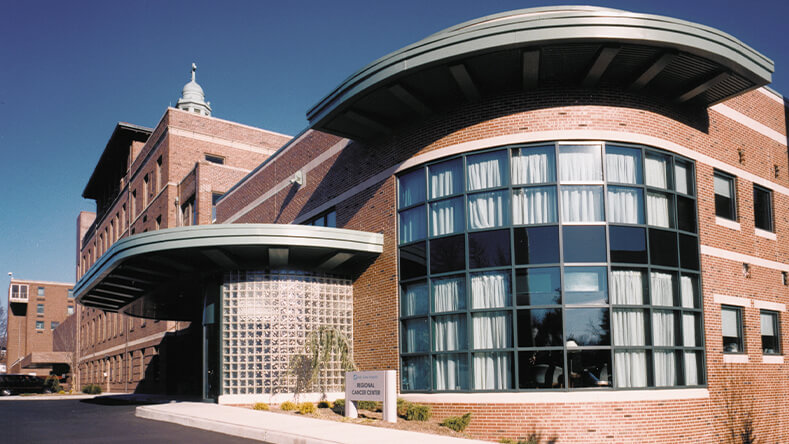
The trend has been a boon to New Jersey office owners, as many of those facilities have been adapted into healthcare uses, including Hunterdon Healthcare, which created a state-of-the-art medical facility including an imaging lab and a surgery center in Bridgewater from a former Bank of America office building.

Technology-Driven Advancements. Just as educational spaces have become more technologically advanced, so have architectural tools. When we were overseeing the construction of the Frank J. Gargiulo Campus in Secaucus we were able to keep the entire project on time and budget through the use of Revit which allowed us to see progress through a 3D model of the school.

The first cad-cam programs, which allowed for digital design on personal computers, are more than 40 years old now, but the real strides are in front of us, with Artificial Intelligence promising enhancements in speed and proficiency that we cannot even begin to estimate.

This article originally appeared in NJBiz

A green roof.

How DMR Services Can Help You Reach New Sustainable Heights

How DMR Services Can Help You Reach New Sustainable Heights 789 444 DMR Architects

Today is Earth Day, a yearly reminder of the importance of sustainability and our environmental impacts.

When it comes to architecture and planning, working with a firm that champions sustainability may be the key to funding, resiliency, cost savings, superior interior spaces and more.

At DMR, we have been a sustainable champion since the early 2000s. What began 20 years ago is more active than ever, as both architectural and planning clients turn to DMR to provide a wide range of sustainable services.

1. Biophilic Design 

Biophilic design, which seeks to connect building design to nature, provides aesthetic, emotional and environmental benefits. At 15 branches of Blue Foundry Bank, DMR’s design called for moss art, which provides the same benefit as plants, but requires no care, water usage or replacement. And for a residential project in Fort Lee, despite its location in an urban environment, the design connected to nature through a window wall.

2. Community Energy Planning

DMR-developed community energy plans have been adopted in four New Jersey municipalities, including in Prospect Park, which was the first plan to be adopted under the New Jersey Board of Public Utilities and Sustainable Jersey Clean Energy Grant Program.

State-level grants, tax credits from the Federal Inflation Reduction Act, and incentives through utility companies remain available, making it the ideal time for municipalities to address energy conservation through a Community Energy Plan.

3. Climate Resiliency Planning

DMR wrote what is believed to be the first stand-alone Climate Resiliency Plan following Governor Murphy’s 2021 amendment to the Municipal Land Use Law. Similar assessments – which address municipalities’ susceptibility to flooding and other global warming hazards – are now required as part of municipalities’ already existing obligation to update their master plan every 10 years.

4. Energy Savings Improvement Plans

Projects through the Energy Savings Improvement Program (ESIP) are ongoing in three preK-12 districts. A cumulative total of projects valued at $45 million are estimated to result in a total reduction in CO2 emissions by 20 million pounds annually. Through the ESIP program, energy-related projects, such as HVAC upgrades and solar panels, are funded using the value of the energy savings that result from the projects, so school boards do not have to utilize capital reserves or taxpayer dollars.

5. Sustainable Buildings & LEED Certification

Since 2003, when DMR pitched the vision for what would become the first LEED Silver public school in New Jersey, seven buildings have received LEED Certification, a celebrated symbol of high-performing and sustainable infrastructure. But DMR’s commitment to sustainability is not limited to only LEED certified projects. The use of sustainable building components is implemented as a standard, regardless of a client’s desire to seek certification.